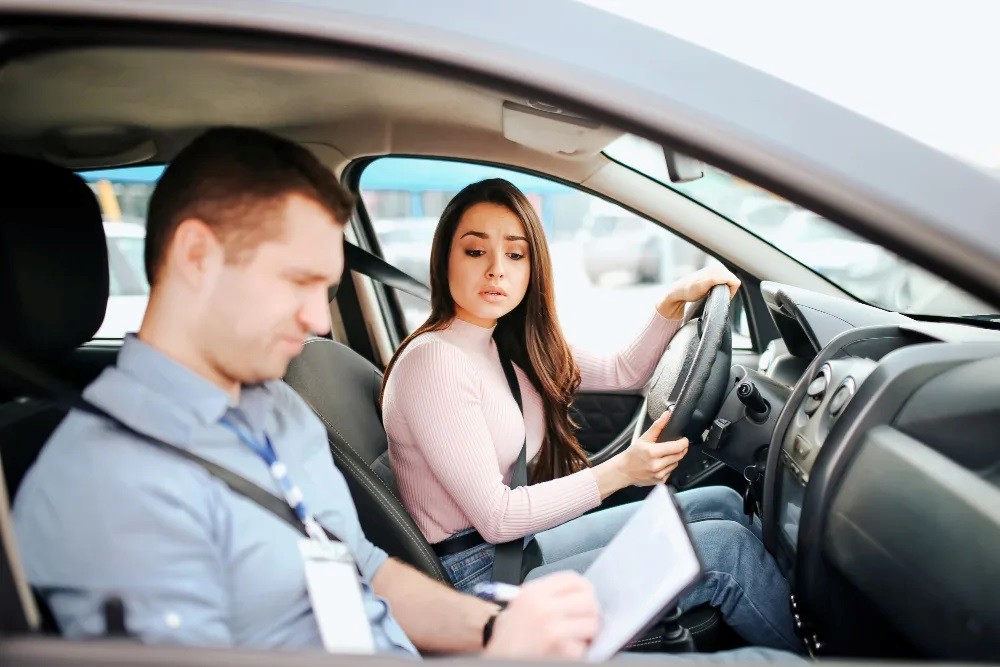
You check the mirror and notice a car sitting much closer behind than you would like. A few seconds later, it is still there. For a learner, that can be uncomfortable enough to change the whole mood of a drive.
The first instinct may be to speed up or keep checking the mirror every few seconds. Neither reaction necessarily helps. The better lesson is learning how to stay focused on your own driving when somebody behind you is behaving impatiently.
Keep Your Attention in the Right Place
The vehicle behind matters, but it should not become the only thing you watch. Traffic ahead, signs, pedestrians, intersections, and your own road position still need attention.
Check the mirrors as part of your normal observation. Once you know the vehicle is there, bring your attention back to what is developing ahead. Staring at the rearview mirror only takes concentration away from the part of the road you are traveling toward.
Do Not Speed Up Just to Please Them
A close-following vehicle can create an odd kind of pressure. Even when you were comfortable with your pace a moment earlier, you may suddenly feel too slow.
Do not allow that feeling to choose your speed. Consider the posted limit and current conditions rather than the impatience of the driver behind. Increasing speed simply to create distance may not solve anything; the other vehicle may increase its speed as well.
Learn to Manage Pressure During Practice
New drivers cannot control how every other road user behaves. They can, however, work on keeping their own decisions steady when another person’s driving becomes distracting.
People searching for driving schools near me may be looking for practical instruction as they build experience in everyday traffic. Situations involving impatient drivers can be discussed with an instructor so the learner understands how to respond without turning another person’s behavior into a reason for rushed decisions.
Give Yourself More Room Ahead
When someone is close behind, it becomes even more useful to avoid creating rushed situations in front of you.
Look well ahead and maintain appropriate space from the vehicle you are following. If traffic begins slowing, early observation can allow a more gradual response instead of an abrupt stop. You cannot create space behind your vehicle yourself, but you can avoid unnecessarily reducing the space available ahead.
Let Them Pass When Appropriate
There may be situations where another vehicle has a safe and legal opportunity to pass. If so, there is no need to treat it as a competition.
Continue driving predictably and avoid trying to prevent the other vehicle from moving ahead. Once it has passed, the pressure may disappear completely. A learner gains nothing by becoming emotionally involved in what another driver is doing.
Talk About the Experience Afterward
After the drive, think about what changed when you noticed the vehicle behind. Did you begin driving faster? Did you check the mirror too often? Did your steering get tight?
Those details reveal how pressure affects your driving. The next time something similar happens, you may recognize your own reaction earlier and keep it from taking over the drive.
Keep the Same Habits Near Test Day
Someone preparing for a dps road test texas may already feel extra pressure behind the wheel. Trying to drive differently because another vehicle appears impatient only adds another distraction.
Consistent habits are more useful. Observe properly, manage speed, leave appropriate space, and make decisions according to the road in front of you. The presence of another driver should not suddenly rewrite the way you have been practicing.
Confidence Does Not Mean Fighting Back
There is a difference between being confident and refusing to be pushed around emotionally. A confident learner does not need to prove anything to the vehicle behind.
Sometimes the most mature response is rather uneventful: keep driving normally, remain predictable, and allow the situation to pass.
Conclusion
Not every uncomfortable moment on the road requires an active response. A driver following closely may be irritating, but turning that irritation into speeding, constant mirror-checking, or hurried decisions can create additional problems.
Learning to stay composed around other people’s behavior is part of becoming independent behind the wheel. Myfirstdrive.net provides Texas learners with driver education, practical training, and road-test services; out on the road, though, learners also discover an important lesson for themselves: another driver’s impatience does not have to become their own.