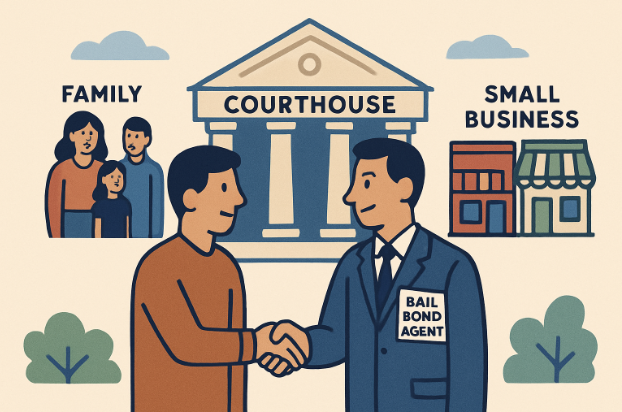
Key Takeaways:
- Bail bonds facilitate the release of individuals awaiting trial, allowing them to maintain employment and family responsibilities.
- They contribute to local economies by supporting businesses and reducing the financial burden on taxpayers.
- Bail bond agencies often engage in community outreach and support social welfare initiatives.
Introduction
The bail bond system is a cornerstone of the American criminal justice process, enabling individuals accused of crimes to remain with their families and continue their daily lives while awaiting trial. By providing a critical financial bridge, bail bonds uphold the legal principle of “innocent until proven guilty” and help maintain community stability. When someone relies on Erie County bail bonds services, for example, it can mean the difference between maintaining a job and facing unnecessary hardships behind bars before trial.
Not only do bail bonds keep families together during challenging times, but they also play an integral economic role within the broader community. This system reduces overcrowding in jails, which, in turn, helps lower taxpayer costs to house pretrial detainees. It also supports local economies by ensuring that community members can continue participating in the workforce and other essential activities.
On a broader level, bail bond agents regularly assist community members by navigating the complexities of the justice system and providing flexible financial solutions for those who might not otherwise have the means to obtain release.
Economic Effect of Bail Bonds
One of the most significant economic benefits of the bail bond system is the ability for defendants to remain employed while awaiting trial. For many families, a sudden absence due to pretrial detention can quickly lead to lost wages, missed bills, and increased reliance on public assistance programs. Bail bonds offer a practical solution, helping families maintain their financial stability during challenging periods. According to a report by the Center for American Progress, prioritizing profits over people in the justice system can have wide-reaching economic and social consequences, highlighting why mechanisms that support continued community participation are so critical.
Beyond aiding individual households, the bail bond industry also creates jobs for agents, administrative staff, and other professionals. The ripple effect extends to local businesses, which benefit from the continued economic participation of community members who otherwise might be removed from the workforce for extended periods.
Social Benefits and Community Support
Bail bonds do more than just support financial well-being—they are vital for preserving the social fabric of communities. With bail bond access, parents can keep providing for their children, students can stay in school, and caregivers can continue supporting vulnerable family members. This stability is essential for mitigating the ripple effects of an arrest, especially for children and dependents who rely heavily on home stability. According to Investopedia, a bail bond is a financial guarantee that allows defendants to remain free while awaiting trial, ensuring they can maintain their daily responsibilities.
Many bail bond agencies actively engage with their communities to address broader social welfare issues. These organizations may partner with local nonprofits to provide educational resources, reentry support, and mentoring for individuals who have experienced the justice system. By investing in social outreach programs and supporting at-risk populations, bail agents contribute to healthier, safer neighborhoods and foster greater trust in the justice system.
Challenges and Controversies
Despite many advantages, the bail bond industry also faces significant scrutiny and controversy. Critics argue that the traditional cash bail system can entrench social inequities by disproportionately impacting low-income or minority defendants, who may struggle to afford bail or secure release. Recent legislative changes in states like Georgia have prompted legal action and public debate, highlighting how bail law reforms can have complex, sometimes unintended, effects on vulnerable populations.
Ongoing discussions about bail reform continue to shape the industry’s future. Some advocate eliminating cash bail in favor of more equitable alternatives. In contrast, others emphasize addressing specific abuses and expanding the availability of fair and accessible bail options for all community members.
Conclusion
The bail bond system remains a cornerstone of many communities across the United States. Its role goes beyond getting individuals out of jail: bail bonds preserve family stability, strengthen local economies, and foster valuable community connections. At the same time, it is essential to continue assessing and reforming bail practices to ensure justice, equity, and fairness for all defendants, regardless of socioeconomic status. As the movement for sensible reform continues, the intersection of economic support, social benefit, and public service offered by bail bond agencies will remain highly relevant in shaping a just society.